

Wedding entertainment is not a contest between a singing waiter, DJ, band or sax player. Each does a different job. The strongest weddings use entertainment to shape the energy of the day: something for arrival, something that creates a shared moment, and something that carries guests into the evening. If you are deciding where singing waiters fit alongside a DJ, band or other live musician, this guide shows how to build a timeline without paying for suppliers who compete for the same moment.
Start by giving every supplier a job
Before comparing prices, define the purpose of each entertainment choice. A drinks-reception musician creates atmosphere while guests mingle. Singing waiters create a surprise and participation during the meal. A DJ manages the flow of the dance floor for several hours. A band delivers the impact of a live evening show. A sax player can add movement and intensity to a DJ set.
Problems begin when suppliers are booked to do the same job at the same time. You need changes of pace, not constant entertainment. Map the day into chapters and choose the format that serves each one.
What singing waiters do that a DJ cannot
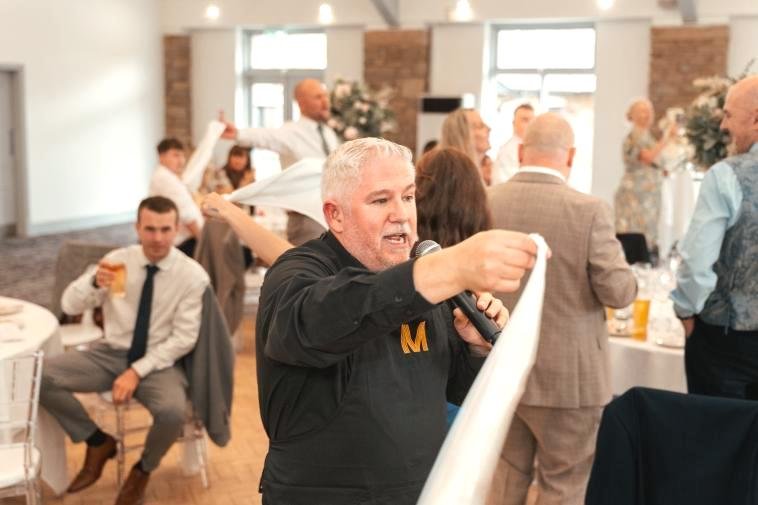
A DJ is brilliant at responding to a dance floor, mixing music and maintaining an evening party. But during a wedding breakfast, guests are seated and often expect conversation rather than a club atmosphere. Singing waiters use that normality as part of the performance. The entertainment is hidden inside the service until the reveal.
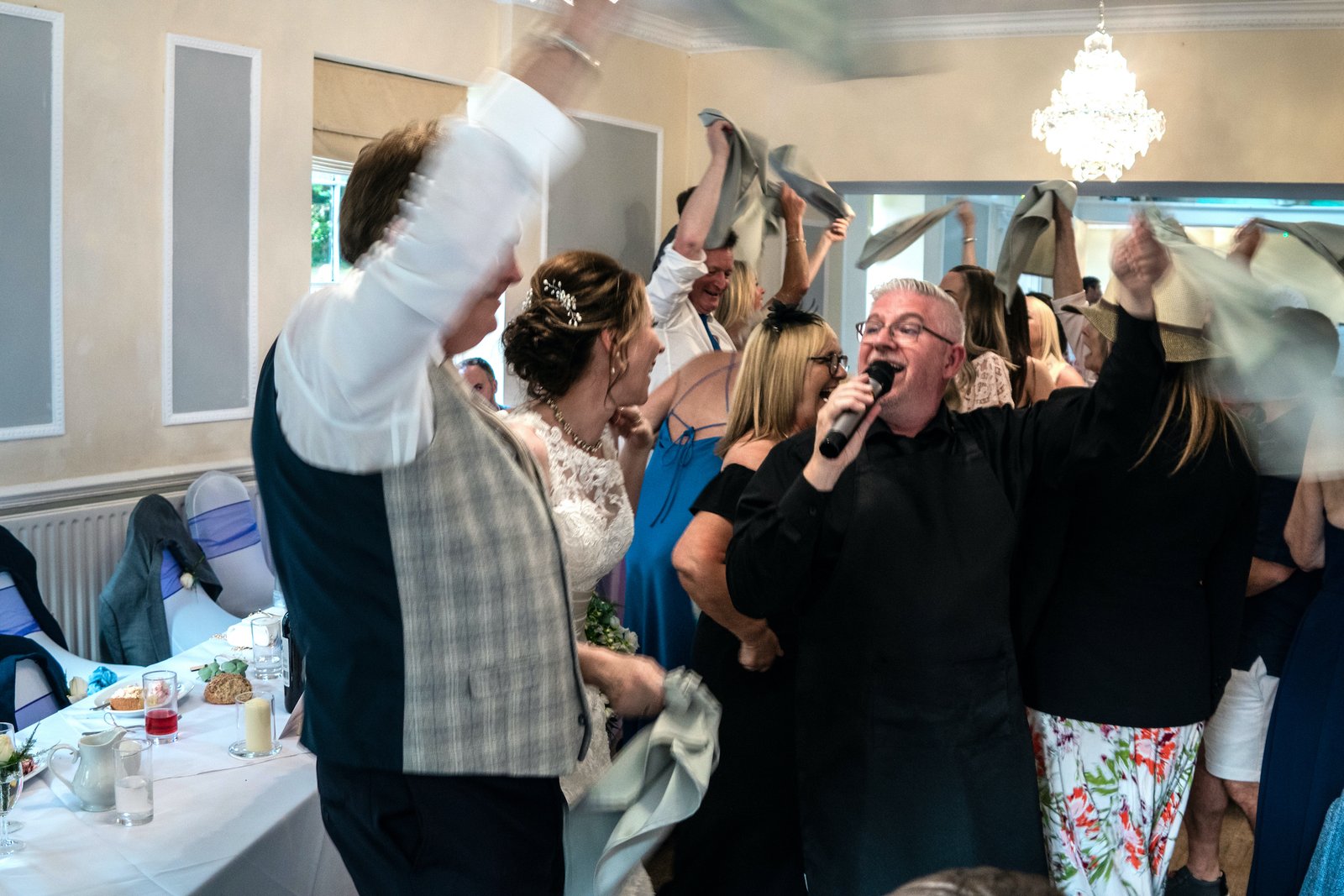
The result is a social icebreaker. Guests who may not know one another suddenly have the same story happening in front of them. The performance can get people standing and singing before a formal dance floor has even opened. It is a different type of energy from a DJ and can make the later party feel easier because the room has already crossed the boundary from polite meal to celebration.
What a DJ does better than singing waiters
A singing waiter set is intentionally concentrated. A DJ can entertain for several hours, take requests, change direction as the crowd changes and handle first dance, announcements and late-night peaks. If your priority is a full evening of dancing, a professional DJ remains one of the most efficient choices.
Rather than replacing the DJ, singing waiters can give the DJ a warmer room to inherit. Guests have already sung together and many have already stood up, so the dance floor does not feel like the first invitation to participate all day.
How a live band changes the evening
A band brings visual scale and the energy of several musicians performing together. It can become the centrepiece of the evening reception, but it needs more space, setup time and technical planning. Bands also usually perform defined sets with breaks rather than continuous music.
If you book both singing waiters and a band, give them distinct identities. Let the surprise belong to the wedding breakfast and the band belong to the evening. Avoid placing both within a short window simply because they are “live.” The contrast between an undercover daytime reveal and a fully staged evening band can make both feel more valuable.
Where sax fits into the plan
Sax works particularly well when you want a musician who can move through the crowd and interact with a DJ-led evening. It can also suit a drinks reception. Its energy is different from singing waiters because there is no disguise-driven reveal unless you specifically design one.
If singing waiters perform during the meal, a sax player later can add a different live layer. Agree the timing with the DJ so the sax has a defined peak rather than competing with another set.
Ceremony entertainment should support the emotion
The ceremony is normally the most emotionally focused part of the day. Music here has a different job from the wedding breakfast. A pianist, string duo, acoustic singer or carefully chosen recorded music can support entrances, signing and the exit without turning attention away from the ceremony itself.
If you love the idea of surprise singers during the ceremony, that can be designed, but it is a much more theatrical decision. For many couples, keeping the singing waiter surprise until later creates a stronger contrast: the ceremony remains elegant and sincere, while the wedding breakfast becomes the unexpected part of the day.
Drinks reception: atmosphere versus attention
During drinks, guests are greeting one another, finding canapés, taking photographs and moving between spaces. Entertainment should usually be easy to join and easy to leave. Acoustic music, piano, strings or light roaming entertainment can work because they add atmosphere without requiring the entire group to focus at once.
If you plan a major surprise here, make sure guests can actually see and hear it. A beautiful outdoor lawn can scatter people over a large area. That is why the seated wedding breakfast often gives singing waiters a stronger stage: the room is already assembled and the performers can control the reveal.
Wedding breakfast: create the shared moment
This is where singing waiters have a distinctive advantage. The performers can become part of the environment, the room is together, and the reveal can change the emotional temperature of the meal. If your wedding includes guests from several social groups, this moment can help create a sense that everybody is at the same party rather than attending separate tables.
Keep other entertainment simple while the undercover period is happening. A loud roaming musician, magician or host may draw attention towards the staff and make guests more observant. That does not mean you cannot use multiple acts during the day; it means each needs its own space in the timeline.
Speeches: protect the words people have prepared
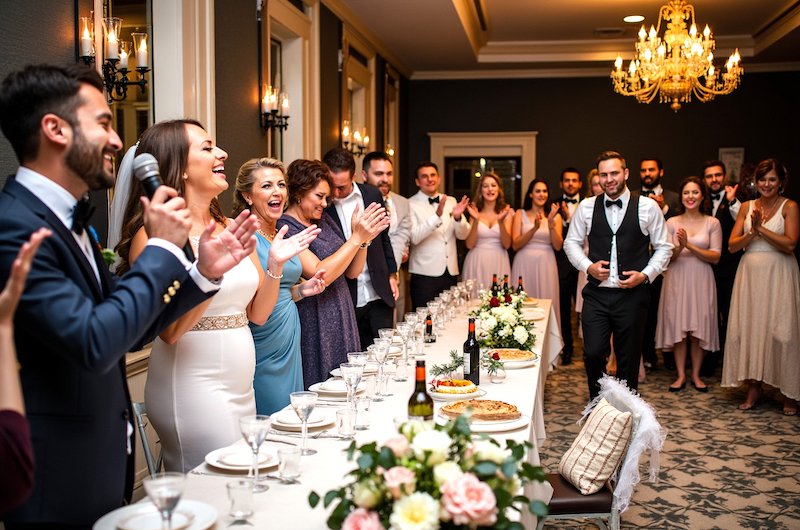
Speeches and surprise entertainment can sit next to each other, but avoid overlap. Give speakers a calm room and functioning microphone. If the singing waiters perform first, allow a reset so guests are ready to listen. If speeches come first, let the final speech finish cleanly before the reveal begins.
Tell the entertainment team if a speech contains a planned surprise, video or musical element. Otherwise two surprises can collide. A coordinated schedule makes each moment feel intentional, while an overloaded schedule makes guests unsure where to look.
Room turnaround: use the energy instead of losing it
After the wedding breakfast, venues often need time to move furniture and prepare the evening space. This can become a lull if guests are simply asked to leave the room and wait. A well-timed singing waiter set can help by sending guests out of the meal on a high. Alternatively, a drinks-reception musician can entertain in another space while the room is reset.
Ask the venue exactly what it needs. If tables must be cleared immediately, do not plan a performance that keeps guests standing between them for half an hour. If the venue has a separate bar or terrace, you may be able to create a natural handover from one entertainment format to another.
First dance: give it its own emotional space
Even couples who want a high-energy wedding often care about the first dance as a separate moment. Do not bury it inside a long chain of performances. Let evening guests arrive, give people time to refresh drinks, then gather them deliberately. Whether the music is live or recorded, the first dance should feel like the start of the evening chapter.
If singing waiters performed earlier, the contrast can be useful. Guests already know the day is playful and interactive, but the first dance can still feel intimate. Once it ends, the DJ or band can move quickly into something that fills the floor.
A DJ plus singing waiters: a simple high-impact combination
For many weddings, this combination covers the main entertainment needs without overcomplicating the day. The singing waiters create the surprise during the wedding breakfast; the DJ handles first dance and evening party. Because the roles are clearly separated, both suppliers can focus on what they do best.
Coordinate the handover through the venue or planner. The DJ may not need to be set up during the wedding breakfast if room turnaround happens later. The singers should know what follows their set so they can finish in a way that suits the schedule rather than encouraging guests towards a dance floor that is not open yet.
A band plus singing waiters: two live peaks
This combination suits couples who prioritise live performance. Think of the singing waiters as the daytime surprise and the band as the evening headline. Give each enough distance to feel fresh. A gap for speeches, drinks, photographs or room turnaround creates anticipation rather than fatigue.
Ask about shared equipment only if the suppliers and venue are comfortable with it. One act’s PA is not automatically appropriate for another. Separate soundchecks may also be needed. Technical cooperation can save space, but it should never be assumed simply because both acts use microphones.
Singing waiters, DJ and sax: build the energy in layers
This can create a very modern party flow when paced correctly. The wedding breakfast surprise gets guests participating early. The DJ establishes the evening dance floor. The sax player then joins at a chosen peak to add live intensity. Each layer has a reason to exist.
The danger is starting everything too soon. If the sax, DJ and singing waiters all deliver maximum energy within the same hour, the evening has nowhere to grow. Save something for later. Guests remember contrast, and good event design gives them moments of anticipation as well as moments of release.
Do you need entertainment in every gap?
No. Silence and conversation are part of a wedding. Guests want time to talk, visit the bar, congratulate the couple and catch up with people they have not seen for years. Entertainment should support the social event rather than turn the day into a festival timetable where nobody can relax.
A useful test is to ask whether each booking creates something new. If a supplier only fills ten minutes that would otherwise be comfortable conversation, you may not need them. Spend the budget on the moments that genuinely change the experience: ceremony atmosphere, the wedding breakfast surprise and the evening party.
How to avoid technical conflicts
Create one shared supplier timeline. Include arrival, setup, soundcheck, performance and pack-down times. Mark who needs access to power, stage areas and loading routes. Ask the venue whether there are limits on volume or the number of systems that can be connected.
Where possible, give suppliers direct contact with the venue for technical questions. The couple should not be translating messages about speaker outputs or sound limiters during the week of the wedding. Professional suppliers are used to coordinating with one another when they know who else is involved.
How to divide the entertainment budget
There is no correct percentage, but prioritise the moments guests will actually experience. Start with the evening requirement: DJ or band. Then decide whether live ceremony or drinks music matters to you. If the wedding breakfast feels like the part that needs personality, allocate budget for the singing waiter surprise.
Compare complete costs, including travel, equipment and extra sets. Combined packages can be convenient, but only when every part serves the day. Do not add entertainment simply because it is discounted.
A sample layered entertainment timeline
- Ceremony: acoustic singer or recorded selections.
- Drinks reception: relaxed playlist or light live music while photographs happen.
- Wedding breakfast: background music at conversation level while undercover singers blend in.
- End of meal: singing waiter reveal and interactive set.
- Speeches: clear reset and dedicated microphone.
- Room turnaround: bar / terrace playlist while evening setup happens.
- First dance: DJ or band opens the evening.
- Later peak: optional sax or second live-band set.
This is only a framework. The strength is the sequence: calm, social, surprise, reset, then evening build.
Questions every entertainment supplier should know the answer to
- What time can you access the venue?
- Where will you set up and soundcheck?
- Who is your venue contact?
- What happens if the schedule moves?
- What equipment do you bring?
- Do you need the other suppliers’ contact details?
- How long do you need to pack down?
- Which part of the room must stay clear?
When every supplier understands these basics, the couple is less likely to become the project manager on the wedding day.
Choose entertainment for the memory, not the checklist
It is easy to plan a wedding by filling categories: ceremony music, drinks music, meal entertainment, DJ, band, sax. A better approach is to ask what memories you want guests to leave with. Perhaps you want the ceremony to feel intimate, the wedding breakfast to contain one huge surprise and the evening to be a packed dance floor. That vision may require only three well-chosen elements.
Singing waiters are most valuable when you want the meal itself to have a story. They do not need to replace a DJ or band. Used in the right place, they make those later parts easier because the room has already laughed, sung and participated together. Build the timeline around contrast, communicate the plan to the venue and let every supplier own one clear moment.