

Singing waiters work because the performance starts long before the first note. The surprise depends on timing, venue coordination, believable undercover behaviour and a set that can bring several generations into the same moment. If you are considering singing waiters for a wedding, this guide explains what happens from the first enquiry to the final song, what you should agree with the venue, and how to protect the surprise without making the day feel over-planned.
What are singing waiters at a wedding?
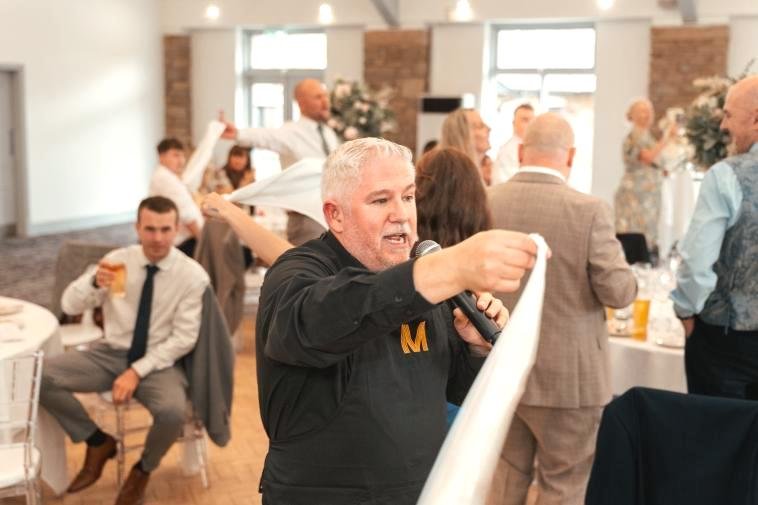
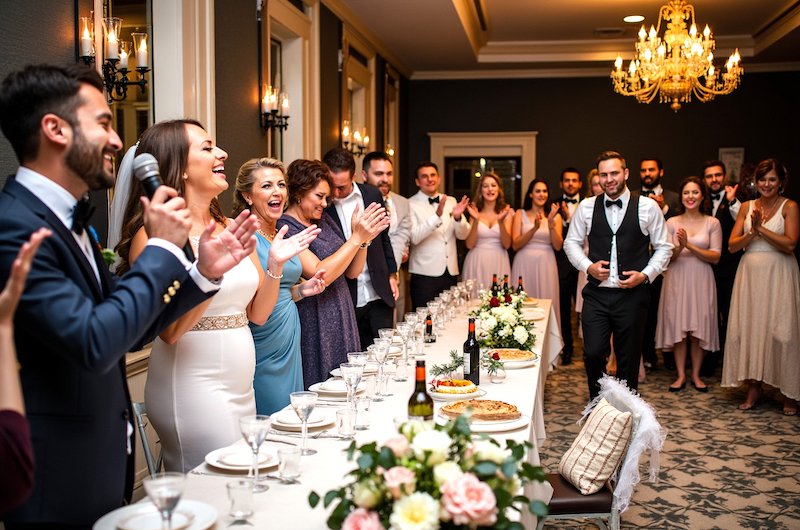
Singing waiters are professional performers who arrive discreetly and blend into the venue or catering team before revealing themselves as live singers. To guests, the beginning of the day looks completely normal. A waiter may help with drinks, clear a glass, point somebody towards the bar or move naturally around the room. Then, at an agreed moment, the atmosphere changes. The performer reveals the act and the room moves from wedding breakfast to live entertainment in a matter of seconds.
The important distinction is that this is not simply a singer walking into the room after dinner. The disguise and the time spent blending in create the emotional payoff. Guests have already accepted the performer as part of the environment, so the reveal feels personal and immediate. That is why the format can work particularly well at weddings: it creates one shared surprise for tables that may include relatives, school friends, work colleagues and people meeting for the first time.
Why the planning matters more than the trick
A convincing reveal should look spontaneous to the guests, but it should not be improvised behind the scenes. The best preparation is practical and quiet. The performers need to know where they can enter without being seen, where sound equipment can be set up, which members of staff are aware of the booking, what the wedding breakfast schedule looks like and what could cause the timing to move.
Weddings rarely run to the minute. Photographs take longer, speeches grow, food service changes pace and guests move between spaces. A professional plan therefore needs a window rather than a single rigid second. The key is to agree what must happen before the reveal, who has authority to give the final cue and how the performance can move slightly without colliding with speeches, coffee service or another supplier.
Step one: enquire with the information that actually helps
When you first ask about availability, include the event date, venue or town, approximate guest numbers and whether the booking is for a wedding breakfast, private celebration or corporate event. If you already know the meal format, mention that too. A formal three-course meal, buffet, barbecue and drinks reception all create different opportunities for an undercover performance.
You do not need to have every song or reveal decided at this point. The first job is to establish whether the date is available and whether the format is suitable for the room. It is also useful to say who is meant to be surprised. Sometimes both partners know about the booking; sometimes one partner is arranging it for the other; occasionally a parent or wedding party is organising the entire surprise. That information changes how communication should be handled.
Step two: decide where the performance sits in the day
The wedding breakfast is usually the strongest setting because the performers can become visually familiar before the reveal. There is also a natural moment when the meal needs a lift. Guests have been seated for some time, formalities may be approaching, and a live interruption can turn the energy towards the celebration that follows.
That does not mean every wedding needs the same timing. If speeches happen before the meal, the performance may work well towards dessert. If speeches follow dessert, the singing set may become the bridge between dining and speeches, or it may be placed afterwards to launch the party. If evening guests arrive early, the surprise can be timed so they are included. The correct choice depends on the room, schedule and purpose of the booking rather than a standard template.
Step three: keep the venue in the secret
The venue should know about the booking even when almost nobody else does. This protects the surprise rather than spoiling it. The catering manager or coordinator can confirm uniforms, staff access, safe routes through the room, power, loading arrangements and the best place for discreet sound setup. They can also prevent well-meaning team members from questioning an unfamiliar “waiter” in front of guests.
Use one venue contact and one client contact who knows the secret. Keeping the communication circle small reduces the chance of an accidental reveal and lets the performers work naturally with the venue team.
Step four: make the undercover period believable
The undercover period is about presence, not theatre for theatre’s sake. Guests should notice the performer just enough to accept them as staff, but not so much that they become suspicious. Small, natural interactions are more convincing than exaggerated characters. The performer may circulate, help with simple service-related tasks approved by the venue, or respond to ordinary guest questions.
Professional singing waiters do not need to handle food preparation or interfere with trained catering duties. The goal is to blend into the visual rhythm of the room. Matching the venue’s uniform where practical, arriving early enough to understand the space and knowing basic information such as where facilities are located all help the illusion. The more normal the first impression feels, the stronger the contrast when the microphone appears.
Step five: choose a reveal that suits your guests
The reveal needs one clear purpose: get the room’s attention without creating genuine distress or confusion. Some performances use a dropped tray or another sudden interruption; others begin through an announcement, a staged interaction or a musical cue. The choice should fit the venue, the couple and the tone of the wedding.
If you have guests who may be uncomfortable with an aggressive prank, say so. The entertainment should create delight, not anxiety. A polished reveal gives people a few seconds to understand that something unusual is happening and then quickly makes the musical intention obvious. Once the first song is established, the act should move forward rather than spending too long explaining the joke.
Step six: build the set around participation
The Singing Wedding Waiters describe their approach as recognisable pop and rock rather than a formal opera-only experience. That direction matters because participation depends on familiarity. Guests are more likely to sing when they recognise the chorus quickly, and the room is more likely to move when the set gives different age groups something they can join.
When discussing music, think about the whole guest list rather than only your personal favourites. A brilliant private-listening song may not be the right choice for a room-wide singalong. Equally, a familiar song can become meaningful because of who is singing it together. You can still include personal preferences, but the strongest set usually balances couple-specific choices with songs that are proven to work in a mixed wedding crowd.
Step seven: plan sound without making it visible
Live vocals need proper sound. The technical setup should be discussed with the venue in advance so the speakers, microphones and playback can be positioned without obstructing service or becoming an obvious clue. The current Singing Wedding Waiters service states that professional sound production is part of the offer and that suitable PA arrangements can be made where a venue requires them.
Room size and layout matter. A long barn, several connected spaces and a large ballroom behave differently. Ask whether every table needs to hear announcements clearly, whether there are sound limiters, and whether the venue has restrictions on where speakers can stand. A strong performance can lose impact if half the room hears the vocal a second later than the other half, so sound planning deserves the same attention as the reveal.
Step eight: tell your photographer or videographer
If you want the reaction captured properly, tell your photographer and videographer what is happening. They do not need to reveal the secret to guests, but they do need to know where to stand. The first few seconds are often the most valuable: the confusion at the interruption, the recognition that the “waiter” can really sing, and the bride, groom or surprised family member looking around the room.
Ask the media team to capture both the performer and the audience. A technically perfect close-up of a microphone is less meaningful than the faces around the tables. Wide shots show the scale of the moment; reaction shots show the emotion. If social content matters to you, discuss vertical clips too, but do not let phones and cameras block the live experience for guests.
How many singing waiters do you need?
There is no universal number because room size, guest numbers, venue layout and the style of performance all matter. The current Singing Wedding Waiters website explains that performances typically feature a minimum of two performers with the option to add more. That gives the team flexibility to cover a larger room, create harmonies and interact across different tables.
For a smaller reception, the priority may be intimacy and clarity. In a much larger ballroom, additional performers can make the interaction feel distributed rather than concentrated at one end. When comparing quotes, do not focus only on the number of singers. Ask how the proposed lineup will work in your specific room and what sound coverage is included.
What should happen immediately after the set?
The ending should connect naturally to the next part of the wedding. If the set finishes before speeches, allow a short reset; if it is designed to launch the evening, let the final song hand energy towards the next part of the celebration. Discuss the full running order so the surprise supports the day rather than becoming an isolated interruption.
Questions to ask before you book
- Who will coordinate directly with the venue?
- What sound equipment is included and what does the venue need to provide?
- How early will the performers arrive and how will they stay out of sight?
- How is the reveal chosen and can it be adapted to the tone of our wedding?
- How much input can we have into the music?
- How many performers are recommended for our guest numbers and room?
- What happens if the wedding breakfast runs late?
- What information do you need from our photographer, planner or caterer?
Clear answers to these questions tell you more than a glossy showreel. The performance may last a relatively short part of the day, but the quality of the experience depends on the organisation around it.
How to protect the surprise without becoming stressed
Keep the circle small. Decide who genuinely needs to know, give the performers one reliable client contact, and let the venue coordinator handle the operational side. Avoid putting obvious supplier names in shared wedding planning documents if the person being surprised has access to them. If invoices or confirmation emails could be seen, use an email address that will not accidentally reveal the plan.
Most importantly, once the practical details are agreed, stop trying to control every second. Guests do not know the script, so they will not notice a two-minute timing adjustment or a slightly different route through the room. The goal is not to produce a television stunt. It is to create a believable, joyful live moment inside a real wedding.
Final checklist for the week of the wedding
- Confirm the latest running order and meal timings.
- Confirm the performer’s venue contact and a backup contact.
- Check uniform or dress requirements with the catering team.
- Confirm sound access, power and any venue limiter restrictions.
- Tell the photographer and videographer where the reveal is likely to happen.
- Make sure the person being surprised will be in the room at the planned time.
- Confirm any essential song requests or songs to avoid.
- Leave enough flexibility for ordinary wedding-day delays.
When these details are handled in advance, you should not need to manage the performance on the day. That is the standard to aim for: the couple experiences the celebration, the venue continues operating normally, and the guests only discover the secret when it is time for the music to begin.
Is this style of entertainment right for your wedding?
Singing waiters are a strong fit if you want entertainment that involves the room rather than simply playing in the background. They can be especially effective when guests come from different parts of your life and you want an icebreaker that does not depend on everybody already knowing one another. They also suit couples who like live music but want the performance to feel woven into the wedding rather than presented as a formal concert.
If you prefer a quiet meal with minimal interruption, the format may not be for you, and that is useful to know. The best wedding entertainment reflects the atmosphere you actually want. If a surprise, recognisable live music and a room-wide reaction sound right, the next practical step is simply to check your date, share the venue details and ask how the team would shape the reveal around your particular wedding.